
Aaron Pico: Choosing the Right Action Under Pressure
When should you act, and when should you keep reading the situation? Tactical patience in combat sports, with a focused task for your next training session.
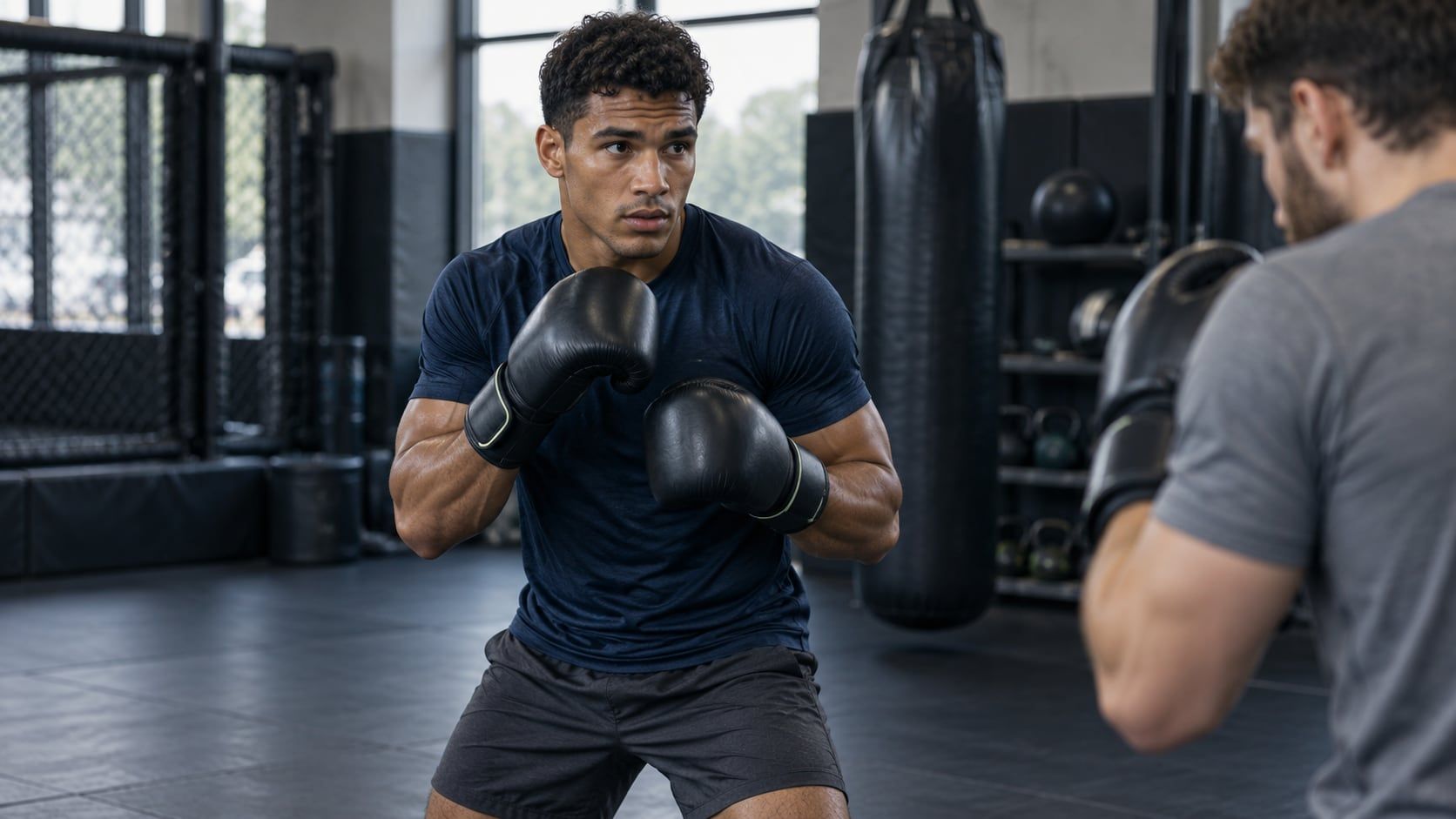
In a UFC interview published on October 23, 2026, Aaron Pico describes a training focus: staying calmer in sparring, understanding situations, and preparing his actions with purpose. The MMA fighter is discussing his own learning process. [1]
For athletes and coaches, this raises a practical question: how can you tell whether an action fits the situation? Working on that question requires a task you can observe and discuss afterward. Simply telling an athlete to stay calm under pressure leaves a lot unexplained.
Give tactical patience a clear task
Imagine a technical partner drill. Your partner changes the distance between you. You have already chosen an action and carry it out, even though the starting situation has changed. The movement might be technically sound. You still need to ask whether you noticed the change in time.
In a situation like this, tactical patience can mean adjusting your intention to what is happening. Depending on the task, an appropriate response might involve another movement, a different option, or a brief wait. You judge the decision against the demands of that particular situation.
During the review, look closely at the moment before the action. What information was available? Which option was actually there? And what had you already decided to do?
This gives patience a specific sporting meaning. You and your coach can examine a particular decision rather than judging an entire drill in general terms.
Where research provides context
A 2022 meta-analysis by Zhang and colleagues compared experienced and less experienced combat athletes across 27 studies. Experienced groups generally responded faster and more accurately. Sports and testing tasks varied. [2]
The review did not test a mental training program. It cannot establish the effectiveness of the exercise below or of WoosahX.
For a training discussion, a manageable question is therefore useful: which information mattered for this particular action? The answer needs to fit your sport, experience, and task.
Take a closer look at one training sequence
The following task is an editorial suggestion, not a scientifically tested training program. Use it with your coach during a familiar technical drill. It does not require extra contact or greater intensity.
Choose a recurring situation, such as a change in distance between training partners. Agree in advance on what you want to observe. Keep the task simple enough that you can identify a specific moment to discuss after a short round.
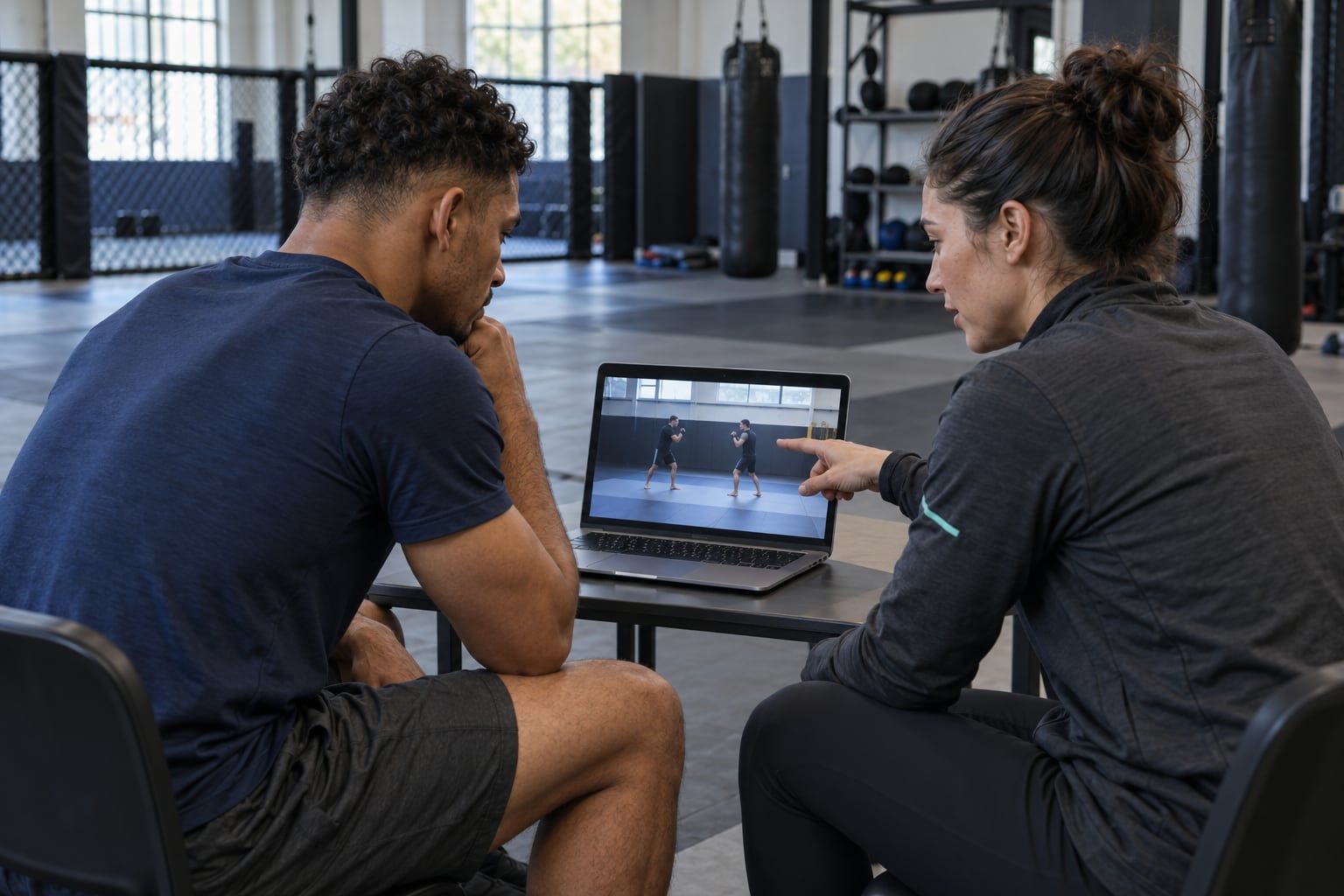
If you have access to your own training footage, select a brief clip. Pause it before the key action. Start by describing only what you can see. Then play the rest and compare your description with what happens next.
Three questions are enough to guide the conversation:
- What change did I notice?
- What action did I intend to take?
- Did my decision fit the situation I had recognized?
A recording only shows what is inside the frame. If a detail is missing, leave it unresolved. Your memory can add to the discussion, but make clear when you are recalling something rather than describing the video.
An unsuccessful movement can still follow a reasonable decision. Discuss the chosen option and its execution separately. Otherwise, every moment can end up receiving the same simple judgment: good when it works, bad when it does not.
Choose one cue for the next round
Turn the discussion into a specific observation task. For example, notice whether your planned action still fits when the distance changes. Your coach determines the technical setup.
Agree on a short cue that makes sense to you. If it adds confusion during the drill, simplify it or leave it out for now. Save the detailed explanation for the break.
Repeat the familiar task. Afterward, choose one moment when you noticed the change and another when you were unsure. You do not need to calculate a success rate. Being able to describe the difference is a useful starting point.
For younger athletes, the coach sets the pace, rules, and scope. There is no reason to make a drill harder for this observation task. The focus is a decision within a suitable training situation.
How a coach can guide the conversation
An open question gives the athlete room to describe their own perception. Start by asking what they noticed and what they intended to do. Then examine the available information and the options that fitted the task.
If the answer remains unclear, return to a specific moment. Point it out in the footage or describe it precisely. A broad question such as “Why were you so rushed today?” asks the athlete to explain an entire session and already contains a judgment.
Praise can also refer to a particular action: the athlete noticed a change and adjusted their decision. That gives you something specific to discuss. You can examine the quality of the movement separately.
Parents do not need an additional analysis assignment. The sporting discussion can remain with the coach and the young athlete.
Take the question into another sport
The same training question can be useful outside combat sports. In football, a passing lane might close just before the ball is played. In tennis, a player might reconsider a planned option after the opponent changes position.
These are hypothetical examples, not findings from the cited meta-analysis. The task itself must come from the sport. A cue that makes sense in a technical partner drill will not necessarily fit a football match in progress.
The shared discussion point is the relationship between information and action: what did you recognize, and how did you respond?
Make a short note for your next session
After training, record one situation in a few sentences. Describe what happened, what you intended to do, and the information that influenced your decision. Add what you want to observe more closely next time.
Bring that note to your next discussion. You may find that the observation task was useful. You may also find that it was too broad or difficult to recognize in the chosen drill. In that case, adjust the task.
This turns the wish to act more deliberately under pressure into a specific subject to work on with your coach. One situation you want to understand better is enough for the next session.
WoosahX uses personalized video sessions built around individual goals and relevant sporting situations. Read more about the background to this approach on our science page.
Read more: Pau Cubarsí on pressure and mistakes in football.