
Where good players look: What happens before the decisive pass
Explore what players see before receiving the ball: football scanning research, its limits and three practical exercises to try with your coach in training.
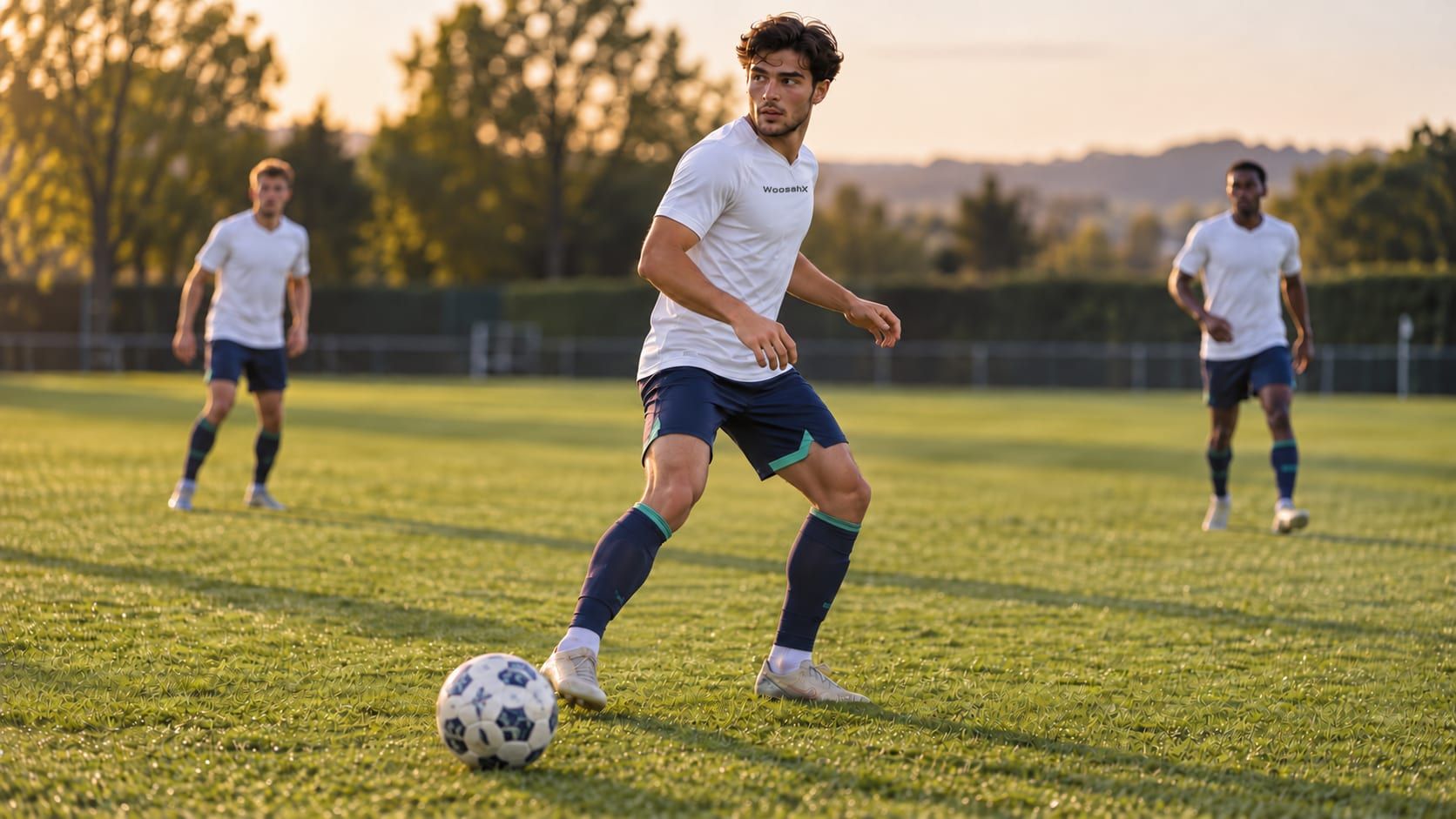
The ball is still travelling. A midfielder checks over his shoulder, adjusts his body position and takes his first touch into space. From the touchline, it looks straightforward. In a training discussion, that is the moment worth revisiting: what information did he have before the ball arrived?
Scenes like this make scanning in football easier to discuss. Judging only the final pass can leave out the preparation. The shoulder check, an opponent’s movement and a teammate’s position all belong in the picture. A new study of visual search provides a timely starting point. The next step on the training pitch is to build tasks that connect what a player sees with what they do.
What the new study found
Zhao and colleagues compared 32 male footballers using three-versus-two and three-versus-three video tasks. The more experienced group responded faster and received better decision ratings. The study was published on 17 September 2026. [1]
For coaches and players, it is a reason to look more closely. It does not establish an ideal sequence of looks for every attack or a fixed number of shoulder checks. The study does not test the effectiveness of WoosahX either.
Scanning: Gathering information before receiving
Scanning involves turning the head briefly away from the ball. Jordet and colleagues observed 27 Premier League players: more frequent scanning was associated with a greater probability of completing a pass. Position and opponent pressure shaped the behaviour. [2]
Imagine receiving in central midfield. An opponent is closing behind you and a teammate is available to your right. Looking before the pass can help you judge whether to turn or lay the ball off. Those options may change again while the ball travels. Your initial idea needs to fit the situation when you receive.
It can help to bring a specific question to the discussion: where is the pressure coming from? Which teammate can I reach? Where is there space for my first touch? You do not need to recite a checklist during play. The questions give you and your coach a way to talk clearly about individual actions afterwards.
One scene, two possible decisions
Picture a pass from a centre-back. Your back is towards the opposition goal. The nearest opponent initially holds their distance. A teammate makes a sideways run into space. You notice the run and prepare to pass in that direction.
Then the picture changes: the opponent moves into that passing lane. Laying the ball back to the centre-back may now be the better option. In a review, asking about the latest available information would be more useful than insisting that every pass must go forward.
A technically accurate pass can still be a poor choice. Equally, a reasonable idea can fail in its execution. Separate the two when reviewing video: what did you see? What were you trying to do? What happened at contact? That gives you a specific task to work on in training.
Three exercises for your next training week
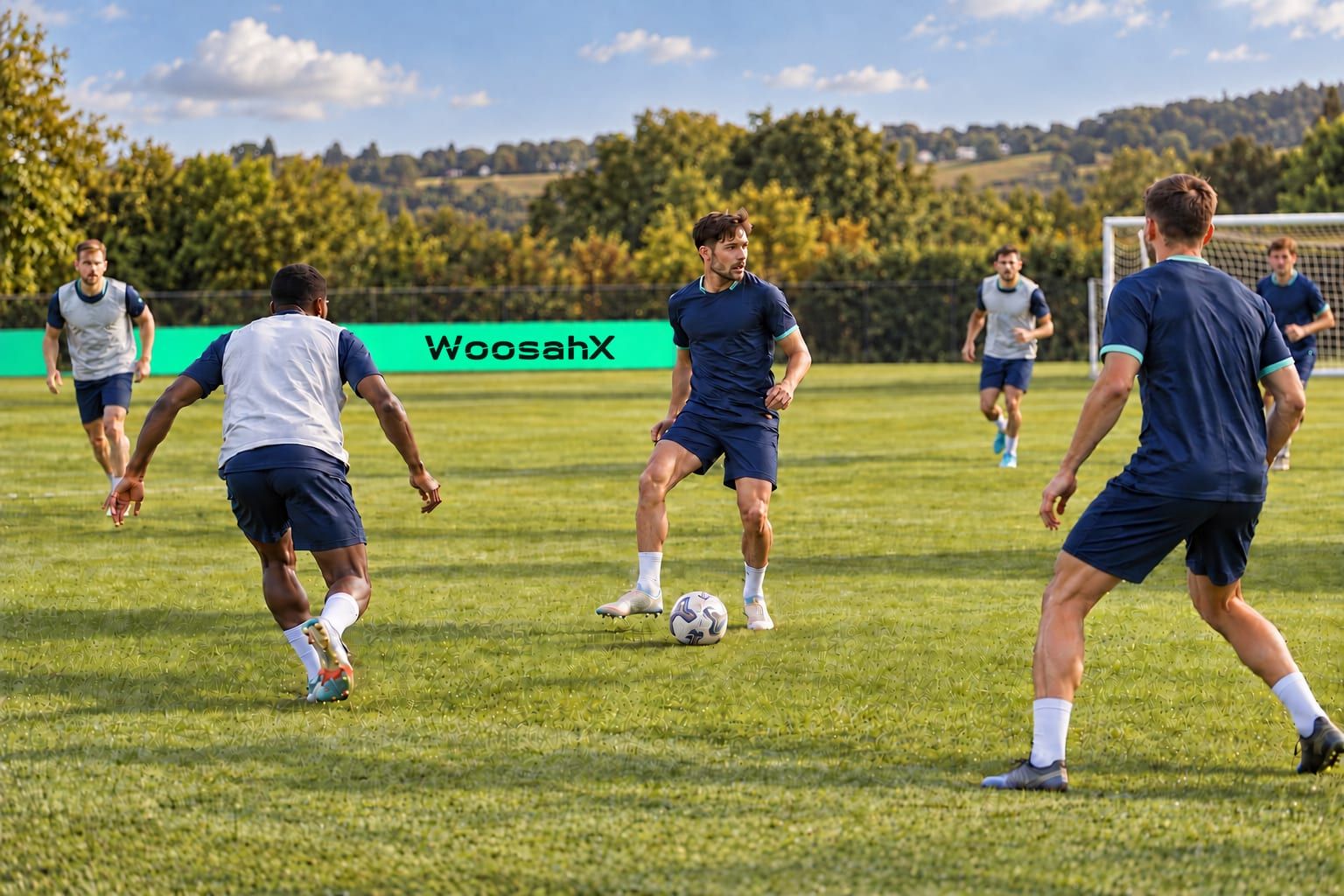
These are editorial suggestions, not a scientifically tested training programme. Adapt distances, tempo and pressure with your coach. The link to match situations is deliberate: in the FIFA Training Centre, Karl Marius Aksum recommends designing perceptual training around realistic, position-specific situations. [3]
1. Pause before you know the outcome
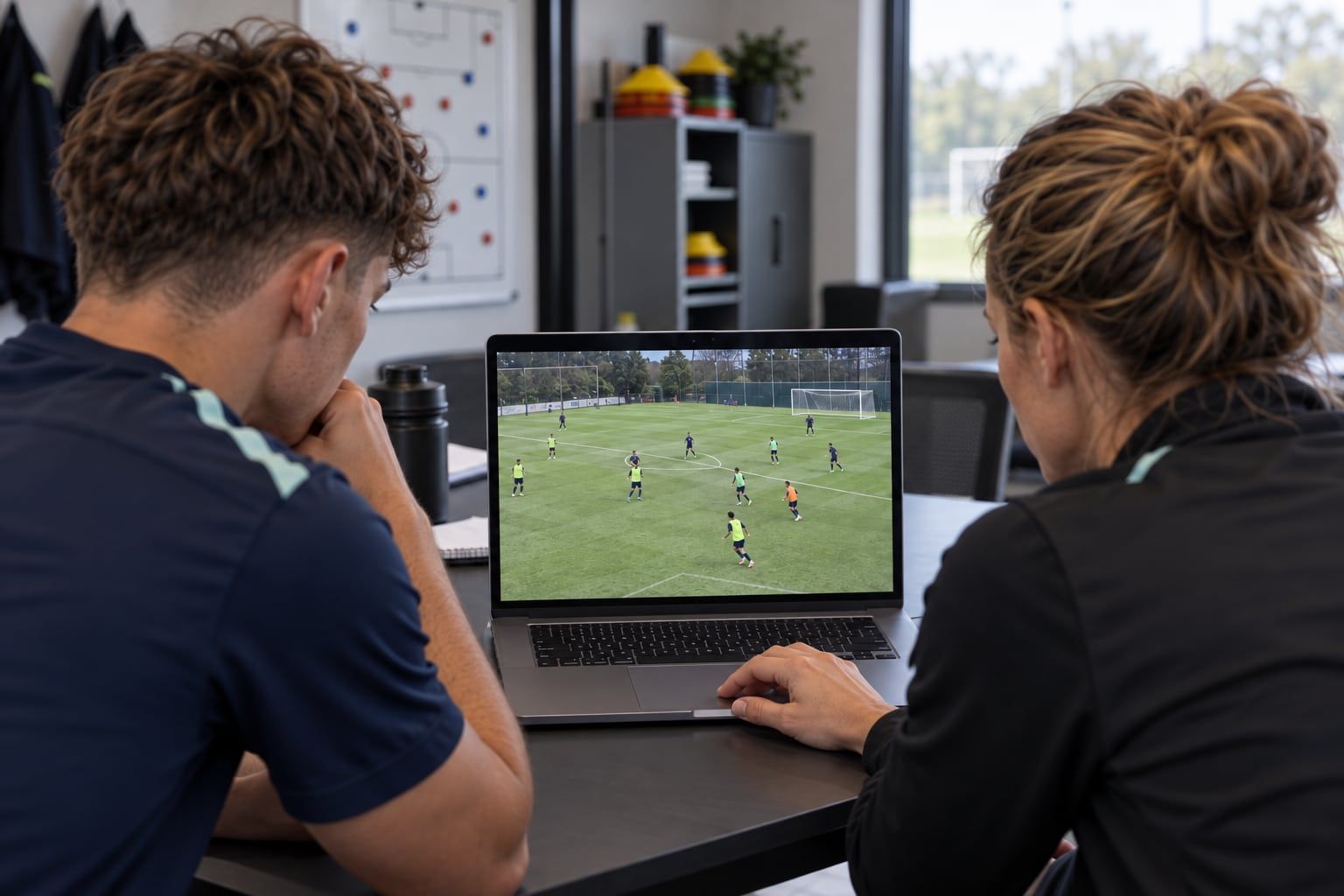
Choose a short clip from your own match or training footage. Pause it before the player receives. Describe where the nearest opponent is and which teammates are genuinely available. Choose an action and explain it using something you can see in the picture.
Only then play the clip on. Compare your idea with the action shown. A different solution is not automatically wrong. Discuss which passing lanes the camera reveals and what the player may have been unable to see. Three carefully discussed clips are a manageable starting point for this exercise.
2. Two exits, one decision
Mark two small dribbling gates behind the receiving player. Place a passer in front and a defender diagonally behind the receiver. Before the pass, the defender moves towards one gate. The receiver checks the situation, controls the ball and tries to dribble through the available gate. If neither route is open, they may pass back to the server.
Start slowly, with clear spacing. Initially, the defender only indicates a direction; later, they can defend actively. Rotate roles. After selected attempts, ask which movement the receiver noticed. Adjust the task if it produces nothing but rushed touches.
3. Name the information in a small-sided game
Play three against three with two small goals, allowing normal decisions at first. After a short round, each player chooses one moment when they received the ball. They describe the information that helped them or was missing. For example: the opponent came from my left, so I took the ball to my right.
In the next round, each player chooses a relevant observation task. One might check the opponent behind them; another might look for the supporting player out wide. Do not award extra points simply for turning the head. Discuss whether the information gathered fitted the action that followed.
Keep one clear task under pressure
For your next session, try a brief cue: spot the pressure before the pass. It gives you a specific task to discuss through a few examples. If thinking about the cue distracts you during play, simplify it with your coach.
After a mistake, bring your attention back to the situation still unfolding. Do you need to close a passing lane, pick up an opponent or offer yourself for another pass? The analysis can wait until there is room for it. Our article about Pau Cubarsí looks further at dealing with mistakes.
Coaches and parents could ask an open question after training: which situation did you recognise earlier today? Let the player explain what happened. Their answer may suggest the next training task. It does not require another instruction shouted at every first touch.
A small observation task of your own
Choose one recurring situation for the coming week, such as receiving in midfield. After each of two training sessions, record one action that went well and one that was difficult. Note what you saw before contact, how you decided and what you want to try again. This is a personal training log, not a performance test.
You can find explanations of mental preparation terms in the WoosahX glossary. To explore our approach, read the science overview behind WoosahX. For your next session on the pitch, begin with one practical question: what information do I want to pick up before I receive the ball?